
Review the Performance, Not the Polish of the Audition

Two audition clips arrive in the same review folder. One has carefully arranged lighting and a clean background. The other is plainly recorded, but the performer makes the line feel like a thought rather than a recital. Which one answers the role your commercial needs?
That is a fictional comparison, not a reason to prefer rough footage. It exposes a useful distinction for a client reviewing commercial auditions: the presentation of a recording and the performance inside it are related, but they are different things to judge. A polished clip can still leave a creative question unanswered. A recording limitation can also make a promising choice difficult to assess.
Before declaring a favourite, identify what you actually observed, what the recording prevented you from seeing or hearing, and what remains a matter of creative preference. Those three notes lead to different next steps.
Start with the job the performance must do
Bring the agreed role description into the review. If the performer is introducing a service directly to camera, listen for the intended relationship with the viewer. If the scene involves listening to another person, watch the response as well as the spoken line. If the action is a product demonstration, consider the action described in the brief rather than treating a pleasing expression as the whole assignment.
Our article on a performance-based casting brief addresses that earlier decision. At the review stage, use the brief as a common point of reference. A client, producer and director may all like the same clip for different reasons; explain which part supports the proposed scene.
For a fictional indoor commercial, imagine an adult performer explaining a new service to someone who is unfamiliar with it. The intended delivery is reassuring and direct. A review note such as “the opening sounds like a conversation, but the final sentence becomes a sales announcement” describes an observable change. “Not our vibe” gives the next person much less to work with.
Keep recording quality in its own conversation
Can you hear the words and see the expression clearly enough to evaluate them? If not, record that limitation. Do not convert missing evidence into a confident conclusion about the person’s ability.
In its report of a casting-director panel on self-tapes, SAG-AFTRA describes the panel’s emphasis on performance and voice, with technical distractions kept out of the way. The report was published in 2019; it is historical professional perspective, not current audition rules or a universal instruction for every commercial.
For a booking client, the useful distinction is between clarity and production finish. A visible face and understandable sound help you assess the material. A location, wardrobe or camera treatment that differs from the planned shoot does not automatically answer whether the performer fits the role. Ask the casting team which differences matter to this particular decision.

The reverse also applies. Do not let attractive lighting settle a question about delivery. State what you like about the performance itself, then identify any uncertainty. You are reviewing evidence for a role, not awarding a prize for the most elaborate recording.
Turn a preference into a note someone can act on
When the team wants a different interpretation, describe the intended change rather than piling up mood words. “Warmer” might mean a slower opening, more attention to the other person, or less emphasis on a particular phrase. Those are different choices.
In the fictional service introduction, a useful note could be: “Keep the clear explanation, but address one person who has just asked for help. Let the final sentence finish the answer rather than announce the brand.” This is an illustrative creative note, not an audition requirement or a claim that it will produce a particular result.
Keep the note connected to the scene. Changing the script, adding a physical task and asking for a new emotional tone all at once may leave the team unsure which change it is evaluating. Decide what you need to learn before requesting more material. Agree the appropriate next step with the casting team and representative, including any applicable audition requirements.
An existing clip cannot prove how a person will respond to a direction they have never received. Likewise, a revised take does not guarantee how the entire shoot will unfold. Describe the evidence you have without expanding it into promises about reliability or results.
Apply the review to the actual Las Vegas scene
A Nevada talent search still needs a creative decision tied to the proposed Las Vegas production. In the fictional indoor service commercial, imagine that the opening is a filmed explanation and a later scene is a conversation with another adult. The team should distinguish direct-to-camera delivery from the listening and interaction needed in the second scene.
That does not require inventing local demand or assuming anything about a performer’s availability. It requires naming the work. If the planned Las Vegas location affects the scene, explain how: perhaps the performer will be seated at a counter, speaking to a visitor, rather than standing alone for a presentation. This is a hypothetical staging choice, not a description of a company facility or client project.
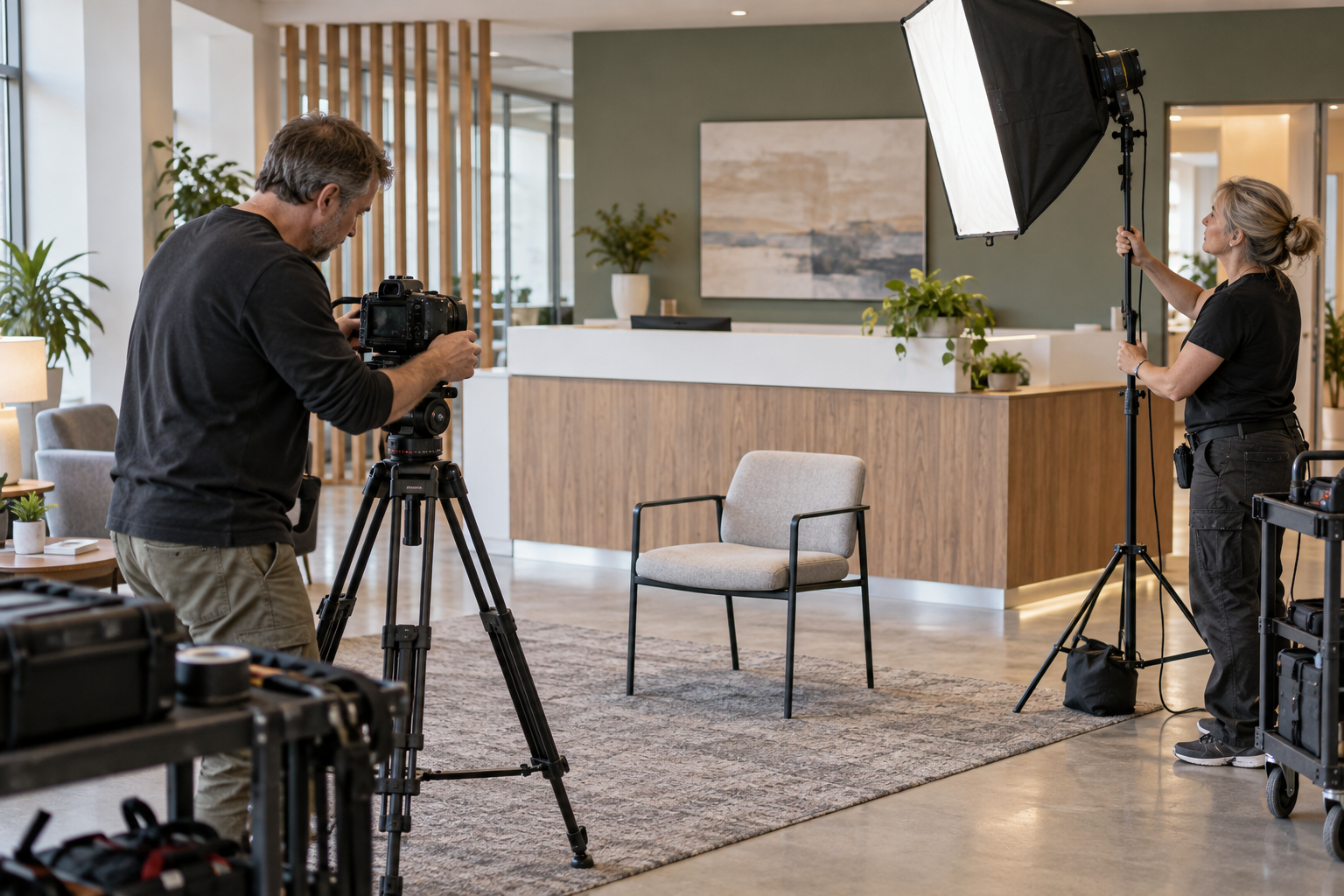
Keep practical questions separate too. A relevant performance clip does not confirm the proposed date, travel arrangements or willingness to undertake additional work. Carry those questions into the booking discussion. Local geography and creative fit can both matter without one standing in for the other.
Leave the review with a clear next decision
Before the team signs off, summarise the choice in plain language: what supports the role, what is unclear, and what needs confirmation. Preserve disagreement when it is useful. A director may prefer the restraint in one take while the client is worried that a key message is hard to hear. Those observations need a conversation, not an averaged score that hides the issue.
You can contact In Color Talent with the project, proposed dates and talent already of interest. Include the actual performance question you are trying to resolve, alongside the booking information. Avoid treating a preferred clip as a confirmed booking.
A useful review gives the next conversation something specific to address. It lets the team distinguish a creative choice from a recording limitation, and a promising performance from a question still open.
AI-generated images illustrate fictional commercial-production scenarios; they do not depict In Color Talent roster members or actual client work.